Connecting rods are essential components in your engine. They connect the pistons to the crankshaft, converting the linear motion of the pistons into the rotational motion needed to power your vehicle. These rods must withstand significant stresses, making their material and design critical for performance and durability. If they fail, you risk catastrophic engine damage. Properly designed connecting rods enhance efficiency and engine dynamics, contributing to overall power delivery. Understanding their role and maintenance can improve your engine’s reliability. Explore how connecting rods affect performance further to better appreciate their impact on your vehicle.
Table of Contents
Key Takeaways
- Connecting rods link the piston to the crankshaft, converting linear motion into rotational motion for engine operation.
- They consist of a big end connected to the crankshaft and a small end linked to the piston.
- Properly designed connecting rods enhance engine efficiency, power delivery, and speed optimization.
- Made from various materials like forged steel and aluminum alloys, they balance strength and weight for performance.
- Regular maintenance and inspections prevent common failures, ensuring reliable engine operation and longevity.
Definition of Connecting Rods
A connecting rod is an important engine component that links the piston to the crankshaft, enabling the conversion of linear motion into rotational motion. This conversion is critical for translating the energy generated during combustion into mechanical power, which drives the vehicle. Connecting rods are typically constructed from high-strength materials like forged steel, aluminum, or titanium, guaranteeing they can withstand the significant stresses imposed by combustion forces and inertial loads. Additionally, understanding connecting rods’ characteristics is essential for enhancing engine performance and durability.
These components generally feature either an I-beam or H-beam cross-section, which maximizes strength while reducing weight—an important factor for maintaining efficient engine performance. Each connecting rod consists of a big end that connects to the crankshaft via a bearing, and a small end that connects to the piston through a gudgeon pin. This design allows for effective force transfer and helps maintain the integrity of the engine under varying operating conditions.
Proper design and maintenance of connecting rods are essential. They endure substantial repetitive forces throughout the engine’s life cycle, and any failure can lead to catastrophic engine damage. As a result, understanding the role of connecting rods is important for any engine enthusiast or technician. You must guarantee that these components are adequately cared for, as their performance directly affects the efficiency and longevity of the engine. To conclude, connecting rods play a significant role in the overall functioning of internal combustion engines, making them indispensable for peak engine performance.
Role in Internal Combustion Engines
Understanding connecting rods‘ characteristics leads directly into their role in internal combustion engines. Connecting rods serve as the essential link between the pistons and the crankshaft, converting the linear motion generated by the pistons into the rotary motion needed for engine operation. Each connecting rod features a big end that connects to the crankpin and a small end that attaches to the piston pin. This design allows for smooth movement and effective force transmission during the combustion process. Additionally, the choice of materials, such as those used in forged crankshafts, can considerably influence performance and durability. In internal combustion engines, the forces exerted on connecting rods can be immense, with tensile loads potentially reaching up to 250,000 psi. These rods must absorb these forces while maintaining structural integrity. The length and design of connecting rods are also essential; longer rods can mitigate sideways forces, which enhances cylinder wall longevity and guarantees effective piston sealing.
However, the high-stress environment in which connecting rods operate means that regular maintenance and inspection are imperative. Rod failure can result in catastrophic engine damage, often referred to as “throwing a rod,” which can lead to irreparable engine issues.
Historical Origins
Connecting rods have a rich historical lineage that dates back to ancient engineering marvels. These components are integral to the mechanical design of engines, and their evolution has greatly influenced modern engineering practices. You’ll find that the historical significance of connecting rods is marked by several key developments:
- Roman Watermills: Early mechanical linkages, including connecting rods, were used in Roman-era watermills, with notable examples like the Hierapolis sawmill (3rd century) and Ephesus (6th century).
- Al-Jazari’s Innovations: Between 1174-1206 AD, Al-Jazari documented a machine featuring a connecting rod and crankshaft mechanism, showcasing early applications in mechanical design.
- Renaissance Engineering: Renaissance sketches by Taccola and Pisanello in the 14th and 15th centuries reveal the continued evolution of cranks and connecting rods, illustrating their persistent relevance in engineering.
- Celtic Discoveries: A connecting rod crank discovered at the Celtic Oppida in Paule, Brittany, dates back to 69 BC, highlighting the long-standing importance of this technology.
Throughout these periods, the crank and connecting rod system has played a critical role in advancing engine design and efficiency. The ability to convert linear motion into rotational motion revolutionized mechanical engineering, demonstrating the enduring impact of connecting rods on the evolution of engines. Such historical insights remind you of the foundational role these components play in modern machinery and their importance in the broader context of engineering development.
Types of Connecting Rods
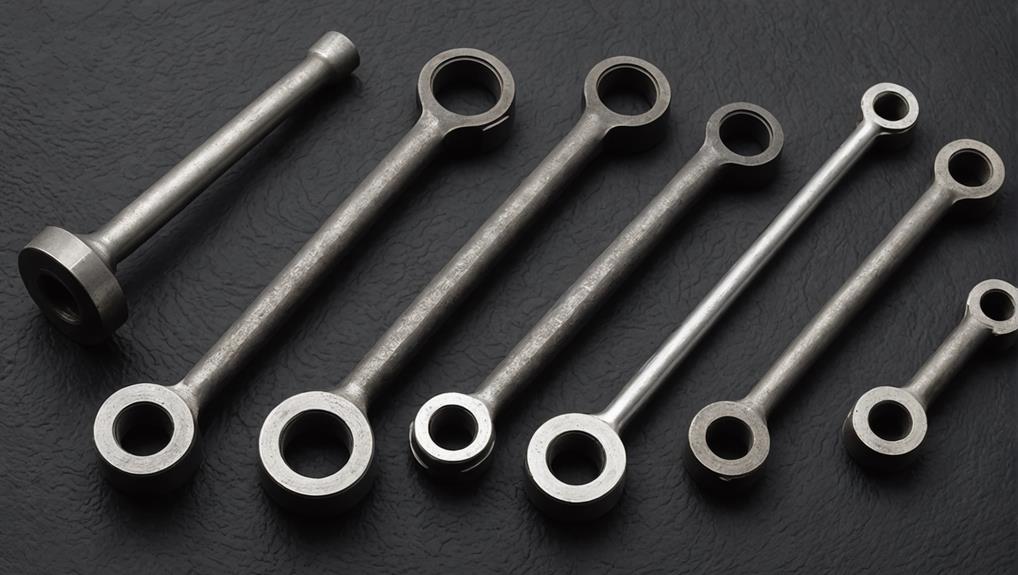
When exploring the various types of connecting rods, it is essential to recognize how each design caters to specific engine requirements and performance goals. Connecting rods work by linking the pistons to the crankshaft, translating linear motion into rotational force. This process is heavily influenced by the type of connecting rod used.
Plain type connecting rods are standard in opposed and inline engines, where precise fitting with a bearing cap is essential for peak performance. Conversely, forged connecting rods, made through a forging process usually with aluminum or steel alloys, offer superior strength and durability compared to cast rods, making them a popular choice in high-stress applications.
For those seeking a balance between cost and strength, powdered metal connecting rods emerge as a viable option. These rods, made from metal powder, provide a stronger and more economical alternative to traditional cast rods, making them suitable for stock engines. If you’re looking to enhance speed and efficiency, lightweight connecting rods are specifically designed for high-performance scenarios, reducing overall weight and improving engine responsiveness.
Lastly, performance connecting rods are tailored to meet the unique demands of specific engine configurations. They often incorporate advanced materials and design techniques, maximizing power output and overall engine durability. Understanding these different types of connecting rods allows you to make informed choices that align with your engine’s performance objectives.
Materials Used
In modern engine design, the choice of materials for connecting rods directly influences performance and reliability. Your selection will determine how well your engine can handle stress, weight, and efficiency. High-performance components crafted from materials like alloy steel are essential for demanding applications, as they provide enhanced strength and toughness that withstand extreme conditions. Here’s a breakdown of common materials used in connecting rod construction:
- Forged Steel: This material is renowned for its superior strength and durability. It’s often the go-to choice for high-performance applications, as it withstands the extreme conditions found in racing and heavy-duty engines.
- Aluminum: Lightweight aluminum rods can notably reduce overall engine weight, enhancing agility and responsiveness. However, they typically have a shorter lifespan than steel rods under high-stress conditions, making them more suitable for lower-performance applications.
- Titanium: If you’re looking for the best strength-to-weight ratio, titanium is an excellent option. It’s favored in high-displacement and racing engines because it combines low weight with phenomenal strength. Keep in mind, though, that titanium comes at a higher cost.
- Cast Iron: While not as common in high-performance settings, cast iron rods are sometimes utilized in standard engines due to their cost-effectiveness and acceptable strength for everyday driving conditions.
Ultimately, your choice of material should align with the engine’s operational demands, balancing tensile strength, fatigue resistance, and overall performance. Each material has its pros and cons, so consider your specific needs before making a decision.
Functional Dynamics
The materials chosen for connecting rods directly impact their functional dynamics within the engine. Connecting rods serve as a significant link between the piston and crankshaft, converting the reciprocating motion of the piston into the rotation of the crankshaft. The efficiency of this conversion is essential for optimal engine performance.
Each connecting rod features two ends: the small end, which connects to the gudgeon pin, allowing for rotation, and the big end connects to the crankpin via a bearing, guaranteeing a smooth transfer of forces. As the piston moves, it generates significant forces that the connecting rod must withstand. These forces include shear, compression, and tensile stress, which can escalate with increased engine speed (RPM) and combustion pressure.
To illustrate the functional dynamics of connecting rods, consider the following table:
| Component | Function | Impact on Performance |
|---|---|---|
| Small End | Connects to the piston via the gudgeon pin | Allows for the rotation during reciprocation |
| Big End | Connects to the crankpin | Facilitates smooth crankshaft rotation |
| Material Selection | Affects weight and strength | Influences durability and engine efficiency |
| Design Type | I-beam or H-beam structure | Enhances strength while minimizing weight |
| Load Distribution | Evenly spreads forces across the rod | Reduces risk of fatigue and failure |
Understanding these dynamics guarantees you’re aware of how each component contributes to engine performance. Proper maintenance and inspection are essential to prevent fatigue and maintain efficiency.
Common Failure Modes
Understanding the common failure modes of connecting rods is essential for maintaining engine reliability and performance. These components face significant stress during operation, and recognizing potential failure points can help you avoid catastrophic engine damage. Here are four common failure modes to be aware of:
- Tensile Failure: This occurs when the connecting rods are subjected to excessive stretching forces, often resulting in breakage below the piston pin. Such failures can lead to immediate engine shutdown and damage to surrounding components.
- Fatigue Failure: Repetitive stress cycles contribute to fatigue failure, where cracks form over time. If these cracks go undetected, they can lead to catastrophic failure of the connecting rod, potentially “throwing a rod” and causing extensive engine damage.
- Rod Bearing Issues: Insufficient lubrication or excessive wear can affect the rod bearing. This may result in increased friction and wear, ultimately leading to failure if not addressed promptly.
- Excessive Loads: Conditions like detonation or valve float create erratic cylinder pressures that increase stress on connecting rods. This exacerbates the risk of both tensile and fatigue failures.
Preventing Connecting Rod Failures
Regular inspections and maintenance of connecting rods are vital to preventing failures that could lead to engine damage. The materials used in manufacturing connecting rods, such as high-strength steel or aluminum alloys, play a notable role in their durability. Understanding the importance of industrial crankshafts is also important, as they work in tandem with connecting rods to guarantee ideal engine performance. By confirming you use quality materials and proper assembly techniques, you can greatly mitigate the risk of tensile stress and fatigue, particularly at forces exceeding 250,000 psi.
During regular maintenance, always check for signs of hydrolock, which can occur from water intrusion into piston chambers. This condition can deform connecting rods and compromise engine integrity. Additionally, improper installation and insufficient torque specifications for connecting rod bolts can result in bolt failure, leading to severe damage. To prevent this, always adhere to the manufacturer’s guidelines for torque settings.
Monitoring the overall weight of connecting rods is also essential. Lighter rods can improve engine responsiveness, but if they’re too light, they may not handle the required stresses. Regularly check for concentricity and inner diameter measurements; any deviations exceeding 0.003 inches should prompt immediate consultation with manufacturers.
Maintenance Checklist
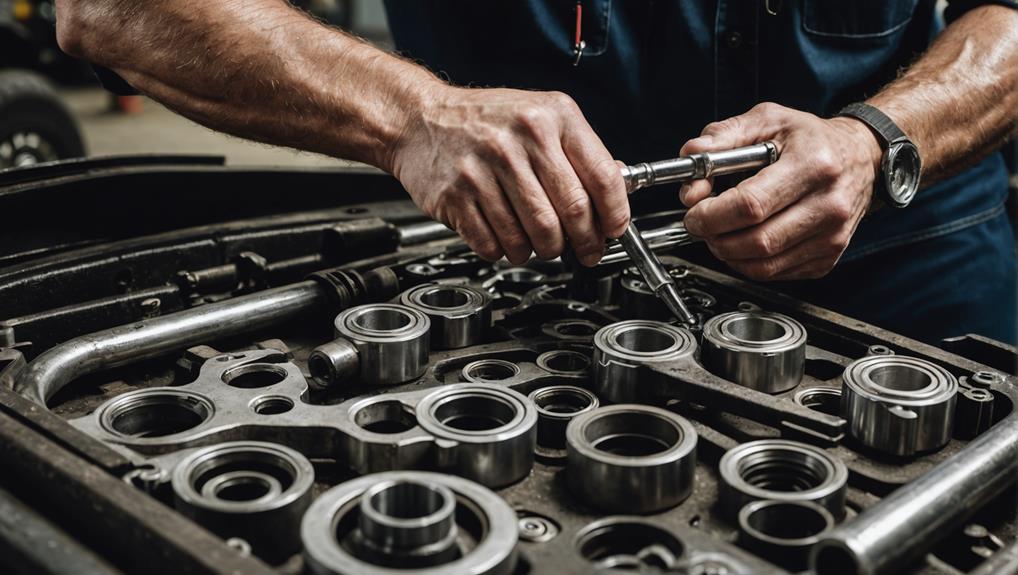
To guarantee peak performance and longevity of connecting rods, a maintenance checklist is indispensable. Regular maintenance helps you identify issues early, preventing costly repairs and guaranteeing your engine operates efficiently. Here’s a concise checklist to follow:
- Wear Inspection: Regularly inspect the connecting rods for signs of wear. Look for bending, cracking, or fatigue, especially in high-stress areas like bolt seats and hinge points.
- Metal Movement Measurement: Measure the metal movement between the small and big ends of the connecting rods. If any variations exceed 0.003 inches, consult with manufacturers for potential replacement to avoid failure.
- Forging Flash Removal: Confirm that all forging flash and irregularities are removed from the connecting rods. This practice reduces the risk of stress risers during operation, promoting durability.
- Lubrication Monitoring: Maintain proper lubrication to prevent overheating and wear. Inadequate lubrication can lead to premature failure of connecting rods, so check oil levels and quality regularly.
Impact on Engine Performance
Connecting rods play a vital role in enhancing engine performance by efficiently converting the linear motion of pistons into rotational motion for the crankshaft. The design and dimensions of connecting rods greatly influence how effectively this conversion occurs. For instance, longer connecting rods can mitigate sideways forces acting on the piston, reducing wear on the cylinder walls, which is essential for maintaining engine longevity. Additionally, the quality and precision of components from top crankshaft manufacturers in India further enhance this process, guaranteeing ideal compatibility and performance. This leads to improved sealing, which enhances the engine’s overall efficiency.
The rod-to-stroke ratio is another important factor impacting engine performance. This ratio, defined as the length of the connecting rod relative to the stroke lengths of the piston, directly affects the engine’s torque output and RPM response. A higher rod-to-stroke ratio typically results in a smoother power delivery and better torque characteristics, vital for performance applications. Conversely, a lower ratio can lead to increased vibration and less efficient combustion cycles.
Moreover, a well-designed connecting rod minimizes stress concentration, maintaining structural integrity during the high forces experienced in combustion cycles. This durability not only contributes to enhanced performance but also helps prevent fatigue failure, which can lead to catastrophic engine damage.
To guarantee ideal engine performance, regular maintenance and proper lubrication of connecting rods are essential. Neglecting these aspects can compromise the effectiveness of the connecting rods, ultimately diminishing engine performance and reliability. By understanding the important role connecting rods play, you can appreciate their impact on the overall efficiency and dynamics of your engine.
Summary of Key Points
Often overlooked, the connecting rod is an essential component in internal combustion engines, linking the piston and crankshaft to facilitate the important conversion of linear motion into rotary motion. Understanding the role of connecting rods helps you appreciate their impact on engine performance and longevity. Here are some key points to take into account:
- Structural Integrity: Connecting rods must withstand substantial forces from combustion and inertial loads, ensuring durability and reliability in high-stress environments.
- Design Variations: Each connecting rod consists of a big end, which connects to the crankshaft, and a small end, which connects to the piston pin. Variations in design influence overall engine performance, including responsiveness and efficiency.
- Engine Characteristics: The length and design of connecting rods greatly affect torque, RPM response, and wear patterns on cylinder walls. A well-designed piston and connecting rod assembly optimizes engine speed and power delivery.
- Maintenance Importance: Regular inspection and maintenance of connecting rods are vital. Neglecting this can lead to failures that result in catastrophic engine damage and decreased performance.
Frequently Asked Questions
What Is the Definition of Connecting Rods?
Connecting rods, you see, are mechanical components linking pistons to the crankshaft. They convert linear motion from combustion into rotational movement, ensuring efficient engine operation and maximizing power output through their durable design and construction.
What Are the Two Reasons Connecting Rod Numbers Are Used?
You use connecting rod numbers to guarantee each piston has a dedicated rod for effective force transmission and to identify specific parts for repairs. This aids in maintaining engine compatibility and optimizing overall performance.
What Is the Function of the Connecting Rod Bolt?
Like a sturdy anchor in a storm, the connecting rod bolt secures the rod cap to the rod body. It withstands immense forces, ensuring effective energy transfer and preventing catastrophic failures during engine operation.
Why Is It Important to Measure Connecting Rods?
Measuring connecting rods is essential for ensuring precise fitment and alignment. You prevent increased wear and potential engine failure by identifying elongation or deformation, maintaining ideal performance, and enhancing the engine’s longevity and efficiency.